Payload Altitude
OVERVIEW
The purpose of this event is to carry a specified and standard-size payload to the highest possible altitude on a specified amount of total impulse. The rocket may be single or multi-staged. The payload needs to be completely enclosed in the model and remain inside the model from launch to return. The model must be returned after flight and the payload inspected by an official. Nothing can be permanently attached (i.e. glued) to the payload.
For the full set of rules see The Sporting Code
SCORING
The best score of two flights is the contestants score in meters. The highest score wins.
GENERAL TIPS
Payload Specifications. To quote the Model Rocket Sporting Code, rule 22.3:
“The standard NAR model rocket payload is a sealed non-metallic cylinder containing fine sand, with a mass of no less than 28.0 grams. This cylinder must be a minimum of 17.0 millimeters in diameter, and a minimum of 60.0 millimeters in length. No holes may be drilled into it, no changes made in its shape, and no other material may be affixed to it.”
No need to grab any calipers — here’s what this effectively means. The payload diameter fits inside a BT-20 body tube.
The keys to this event are minimum body size, minimum drag, proper motor selection, and minimum weight.
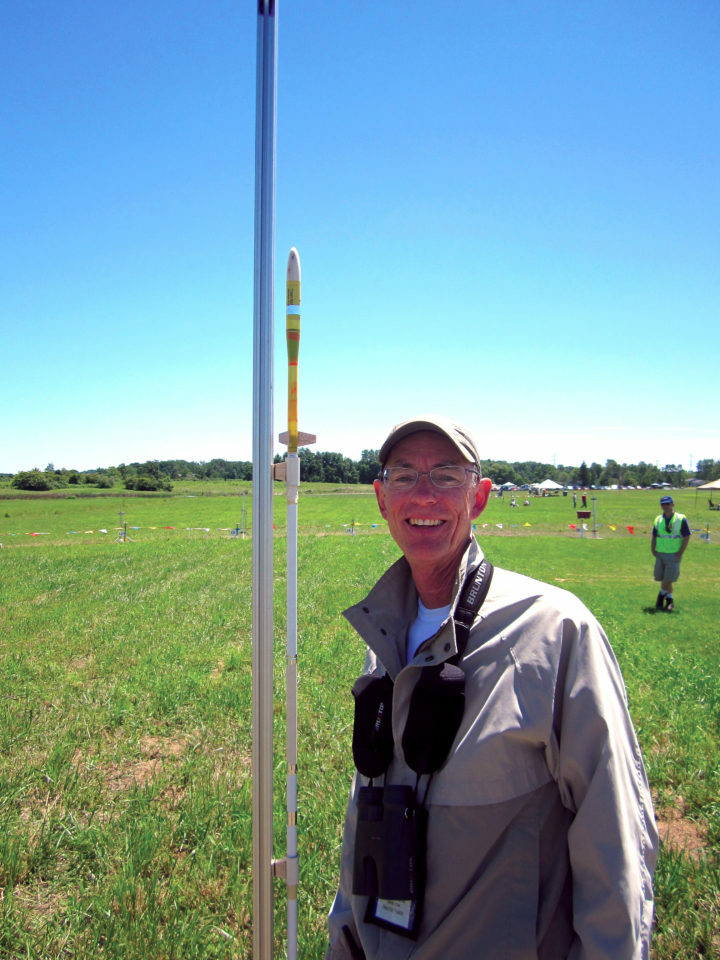
Minimum Body Size. Always use the smallest body diameter that will contain the payload and the motor or (if staged) motors that you use. Then use the minimum body length that will contain the motor, the payload, and the parachute. This will minimize the frontal area and wetted surface area of the rocket, minimizing its drag.
Minimum Drag. Put the best surface finish on rockets for this event that you know how to do. Use a nose cone that is parabolic in shape with a length-diameter ratio of 2 or 3 to 1. If the nose cone is balsa, user filler coat, sanding sealer, or Elmer’s wood-filling paste to completely fill the grain and polish it with at least 600 grit sandpaper to make the finish mirror-smooth. Pay close attention to the nose-body joint to ensure that it is smooth. Sand the surface of the body tube to ensure there are no ridges from any spiral winding. Use thin waferglass for the fins, or if you use balsa use thin material with the same techniques as the nose to ensure a smooth surface finish and put a good symmetrical airfoil on the fins. Use a fin jig to put the fins on absolutely straight so the rocket does not spin during its upward flight. Do not make the fins very small even if computer programs tell you that you can and still have a stable rocket; the heavy payload in the nose requires some fin area to make the rocket “dynamically” stable. Make the shock cord mount internal so there are no protrusions on the surface of the body. Use a piston launcher or a tower launcher (or a piston inside a tower) to permit leaving off the draggy launch lug or rail buttons.
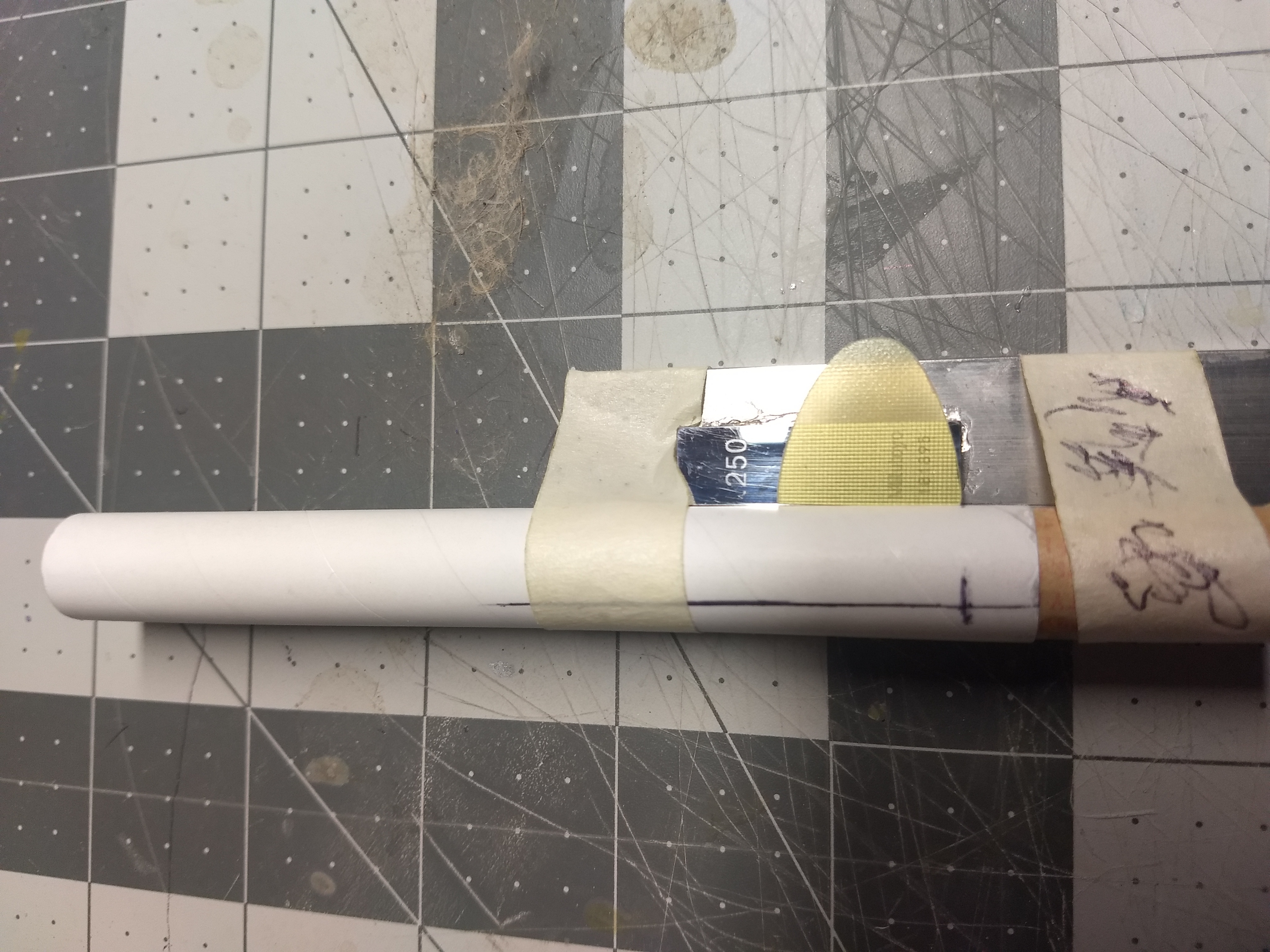
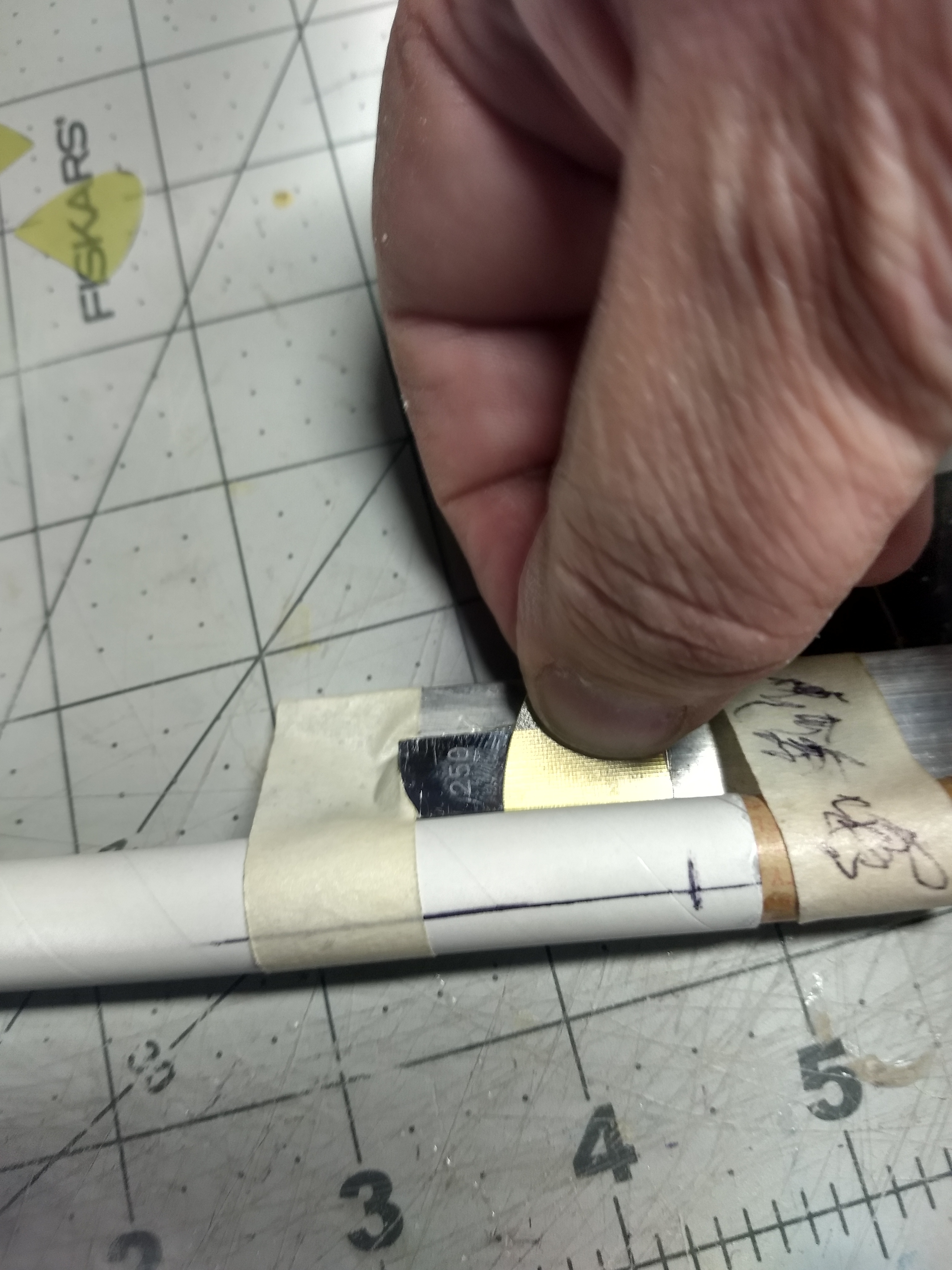
The gold standard for fin jigs is the Art Rose fin jig which is difficult to obtain and very costly. A cheaper alternative fig jig suitable for A payload altitude is shown below:
KITS
Apogee Spek
Apogee Midge
Apogee NAR Payload Kit
Altimeters
MicroPeak from Apogee
Adrel from Apogee
Adrel from North Coast Rocketry
NARAM 68 A Payload Altitude Beginner Tips
At NARAM 68 A Payload Altitude will be flown. This is an event which may not be too difficult to get a qualified flight in but can be difficult to get really good at.
It could be appropriate for a beginner to scratch or plans build a model. However, kits are always a convenient option. The Spek or Midge from Apogee (flown as a single stage model) is a reasonable rocket to use for the event. Apogee also sells a payload kit, so a modeler doesn't need to construct their own. To construct a payload, a modeler will need access to a gram scale and will need add their own sand for mass.
Many modelers will construct payloads from cardboard tubes or from 3D printed parts.
The reference links show an option to build a model from plans.
These models require an altimeter, so one must be purchased. Altimeters aren't that difficult to use, but a beginner should read through all the documentation and might need to practice using the altimeter before making a competition flight.
Typically, at NARAM it is possible to rent an altimeter and typically gram scales are available for us at NARAM. However, at the time of writing those details have not been announced.
Documents and Links
A-B Payload.pdf
NAR Model Rocket Payload How To